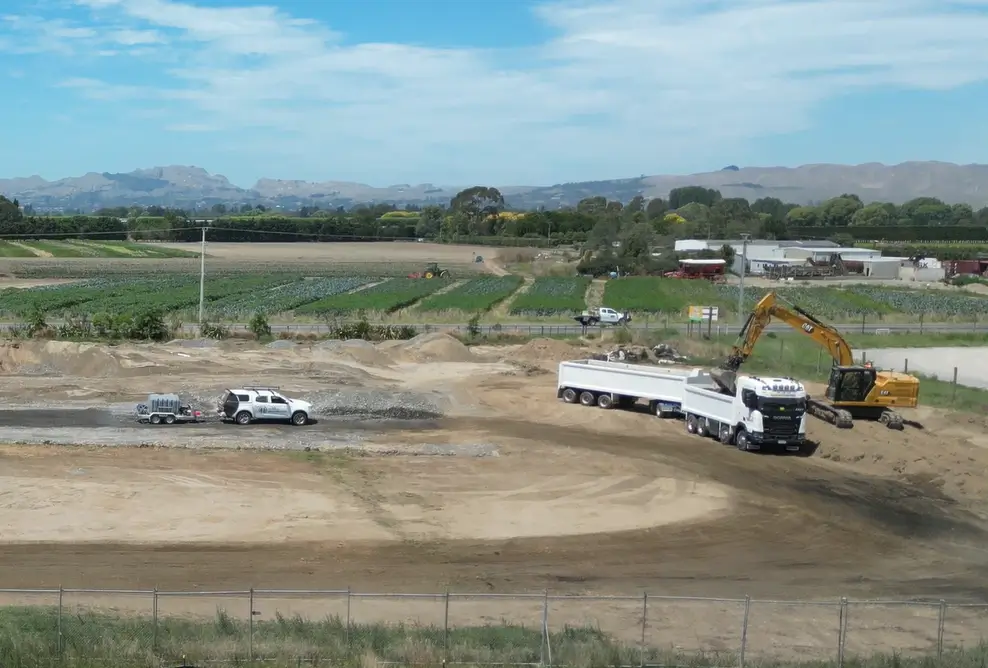
Night works are a fact of life on NZ roading and civil projects. Resurfacing, stabilising, utility connections and maintenance are often done overnight to keep traffic moving during the day. But working in the dark changes the risk profile of a site completely, and lighting stops being a convenience and becomes a genuine safety and compliance requirement.
This guide covers what NZ road and civil crews need to know about night works lighting: the rules that apply, how much light you actually need, where to put it, and why crews doing regular night shifts increasingly choose a purpose-built lighting tower trailer over hiring standalone towers. If you run night works, getting the lighting right protects your crew, keeps you compliant, and keeps the job moving.
Why Night Works Lighting Is a Compliance Issue, Not Just Visibility
It is easy to think of worksite lighting as simply being able to see what you are doing. It is more than that. Under the Health and Safety at Work Act 2015, a business has a duty to provide a safe working environment, and on a night site adequate lighting is a core part of that duty. Poor lighting is directly linked to slips, trips and falls, plant and pedestrian incidents, and the fatigue that comes from straining to see detailed work in the dark.
On a road site, there is a second layer. Your crew is working metres from live traffic, and lighting has to help drivers see the worksite and your workers without dazzling them. Lighting that is inadequate, or badly aimed, is not just uncomfortable, it is a hazard to your crew and the public, which is why it is treated as part of your traffic management and health and safety planning, not an afterthought.
The Rules: NZGTTM, WorkSafe and the Standards That Apply
Night works on NZ roads sit under theNew Zealand Guide to Temporary Traffic Management (NZGTTM), which has replaced the older Code of Practice for Temporary Traffic Management (CoPTTM). NZTA stopped updating CoPTTM in late 2024, and from 1 October 2025 the NZGTTM applies to all NZTA maintenance and capital projects. Individual road controlling authorities are transitioning on their own timelines, though, so it is worth checking what your local RCA requires for a given job. An RCA (Road Controlling Authority) is the body with legal control over a particular road network: your local city or district council is the RCA for local roads, while NZ Transport Agency Waka Kotahi (NZTA) is the RCA for state highways. Because each one manages its own network, councils are moving from CoPTTM to the NZGTTM on their own schedules, which is why you need to confirm the requirements of the authority governing the area where the job takes place.
The NZGTTM was developed alongside WorkSafe’s good practice guide for keeping healthy and safe while working on roads and roadsides, and the two are designed to work together. The key shift with the NZGTTM is that it is risk-based rather than a rigid template. Instead of following a fixed lighting layout, you are expected to assess the specific hazards of your site and provide lighting that actually manages them. General worksite lighting also draws on the joint standard AS/NZS 3012 for construction and demolition site electrical installations and lighting. The practical upshot is that you need to think about the task, the site and the traffic, and light accordingly.
The Sitemaster 2000 set up for night works, combining mobile lighting with a towable site unit that can be repositioned as the job progresses.
How Much Light Do You Need? Lux Guidance for Night Works
First, a quick distinction, because the two terms get mixed up. Lumens measure the total amount of light a fitting produces, while lux measures how much of that light actually lands on a given area (one lux is one lumen spread over one square metre). For night works, lux is the number that matters, because it tells you how well-lit the work face really is, not just how bright the tower is on paper.
Because the NZGTTM is risk-based, there is no single lux figure that covers every night job. The right level depends on the task. As general guidance drawn from construction site lighting standards, walkways and general access areas are often lit to around 40 lux, while areas where detailed work is being done need considerably more, commonly above 160 lux. Emergency lighting, enough to let people leave the site safely if the main lighting fails, is typically at least 20 lux.
This is where the relationship between lumens and lux matters on site. A lighting tower puts out a fixed amount of light, so lux and the area you cover are inversely related: the tighter you focus the light, the higher the lux; the wider you spread it, the lower the lux. Take the SiteMaster 2000’s 68,000 lumens as an example. Focus the heads onto a tight work spot of around 150 m² directly under the 5.5 m mast and you concentrate that light for 160+ lux, enough for detailed precision work. Aim the heads outwards to cover a broader footprint of around 1,350 m² and the same light spreads thin, dropping to about 20 lux, which suits basic safety and egress lighting rather than close work.
The principle to take from this is that a single work light pointed vaguely at the site is rarely enough. Detailed tasks such as reinstatement, jointing and finishing need genuine light on the work face, while access routes and the wider site need enough to move around safely. Match the lighting to the most demanding task on site, cover the access and traffic-facing areas too, and confirm the requirement against your own risk assessment and any RCA conditions for the job.
Getting the Placement Right
How you position lighting matters as much as how much of it you have. Light needs to fall on the work face where the crew is actually working, and access routes, the area around plant and the interface with live traffic all need coverage. Shadows are a particular hazard: a poorly placed tower can create dark patches right where someone is working, which is worse than no light because it gives a false sense of visibility.
Height and aim are the two levers. A taller mast covers more ground from one position, and directable heads let you put light where it is needed rather than spilling it where it is not, so you can keep the crew properly lit as the work moves.
The Sitemaster 2000 supporting overnight road works, providing elevated site lighting so crews can work safely and maintain visibility around moving plants and live traffic.
Glare and Light Spill: Lighting the Work Without Creating New Hazards
Two problems come from lighting a night site badly. The first is glare: light aimed towards oncoming traffic dazzles drivers at exactly the moment they are approaching your crew, and light in your workers’ eyes stops them seeing the work. The second is light spill into neighbouring properties, which generates complaints and, near residential areas, can breach consent conditions.
Good night lighting is aimed and shielded so it illuminates the work and the site without throwing light where it causes harm. Directable heads angled onto the work face, rather than fixed floods that spray light everywhere, are the practical answer. Add the amber flashing warning lamps that mark the worksite and its hazards for approaching traffic, and you have a site that is both properly lit and clearly defined.
Standalone Towers vs an Integrated Lighting Tower Trailer
Most crews start by hiring standalone lighting towers, and for an occasional night job that works. But for crews doing regular night shifts, the standalone approach has real drawbacks. Each tower is a separate unit to transport, set up and fuel, and if you also need water and power on site, that is more equipment again to tow and coordinate.
An integrated lighting tower trailer combines lighting, water and power in a single tow. For a night crew that routinely needs all three, that is one unit to move, set up and run instead of three. LED heads reach full output immediately, so there is no waiting for lamps to warm up when you shift a tower mid-shift, and they cool quickly enough to drop and move the mast without risking the lamps. For crews progressing along a corridor overnight, that speed is a genuine saving. We compare the two approaches in more detail in our guide on a lighting tower trailer versus a standalone lighting tower.
The SiteMaster 2000: Lighting, Water and Power in One Tow
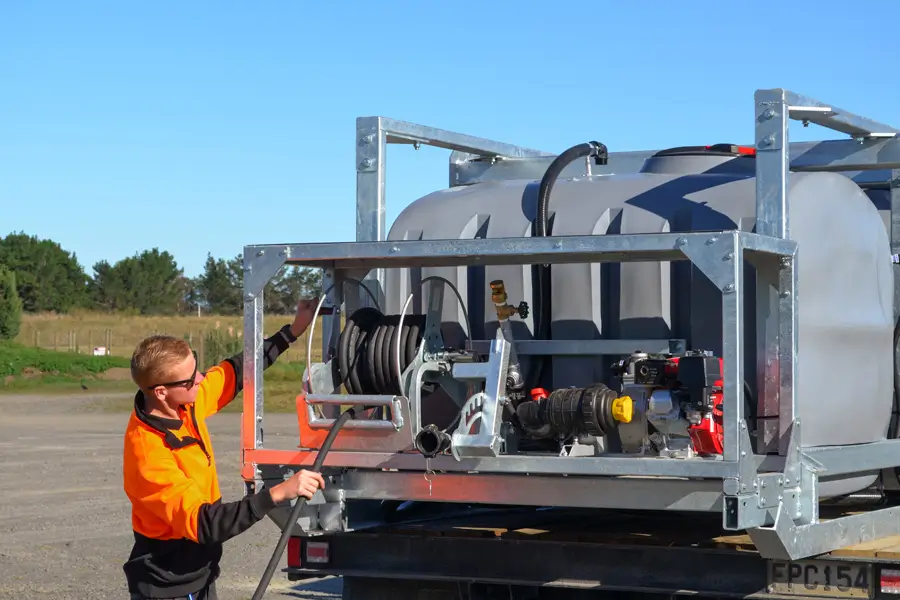
The SiteMaster 2000 is Master Machinery’s all-in-one site trailer, built for NZ crews who need lighting, water and power on the same job.
Key specifications:
Lighting tower: four LED lights producing 68,000 lumens in total, on a mast that extends to 5.5m with 360 degree rotation and independently directable heads
Power generation: a 5kVA generator with two 240V outlets, one running the lighting tower and one left free for site tools
Water: a 2000L tank with a 120 L/min flood jet nozzle and a 25m low pressure hose
Trailer rated to 2500 kg, with a dual 1-7/8 inch and 50mm hitch coupling, towable by any ute or light commercial vehicle with a 2500 kg towing capacity
The lighting covers a typical road works zone, a stabilising or paving section, or a small to medium emergency response site. The directable heads put light on the work face, and the immediate full output of the LEDs suits jobs that move along a corridor. The second 240V outlet runs the concrete breakers, small welders, grinders, pumps and chargers a night crew relies on.
In practice, NZ crews use the water and the lighting at the same time rather than switching between day and night modes. Stabilising road millings with cement and water on an overnight resurfacing shift is the clearest example, and it is one of the reasons the unit is configured the way it is. If you only need water, the AquaMaster 2000 is the simpler and cheaper buy.
Planning Lighting for a Regular Night Crew
If night works are a regular part of your operation, plan your lighting as a capability rather than a job-by-job hire. Consider the tasks you do most often and the lux they need, the typical size of your worksites, whether you also need water and power, and how often you reposition as the work moves. For occasional night jobs, hiring towers as needed is fine. For regular overnight roading, stabilising or utility work, owning an integrated unit removes the coordination, the repeat hire cost, and the risk of turning up a tower short.
The Bottom Line
Night works lighting on NZ road and civil sites is a safety and compliance requirement, not a convenience. Under the NZGTTM and your health and safety duties, you need enough light, in the right places, aimed so it helps rather than dazzles. Get it right and your crew works safely and your site stays compliant and complaint-free.
For crews doing regular night shifts, an all-in-one unit that carries lighting, water and power in a single tow is often the most practical answer. Explore the SiteMaster 2000 to see the full specification, or get in touch with the Master Machinery team to talk through what your night works need.