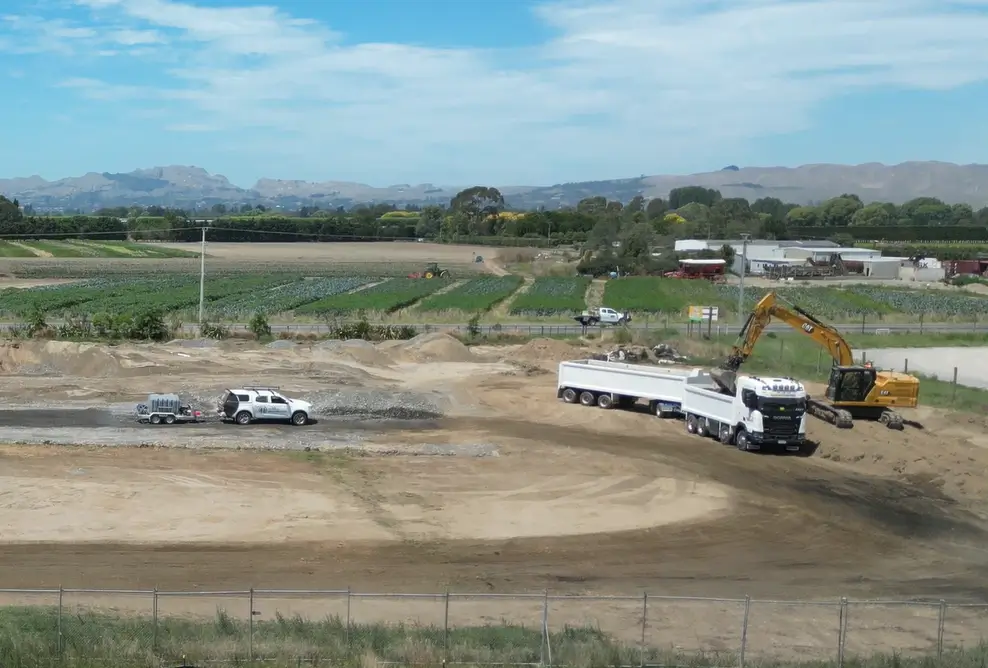
If your crew works nights, you need light. That part is simple. What is less simple is deciding whether that light should come from a dedicated standalone lighting tower, or from a site trailer that carries lighting along with water and power on the same unit.
Both options work. They suit different operations, and the right answer depends less on lumens than on how your crew moves around a site, how often you work after dark, and what else you need on the job at the same time.
What We Are Comparing
The Standalone Lighting Tower
The familiar option. A dedicated trailer or skid with a mast, a set of lights and its own engine, usually diesel, built to do one job well. Most NZ contractors encounter these as hire units. They are widely available, they are simple to specify, and for a lot of work they are exactly right.
Larger models offer high mast heights and serious light output, and because lighting is the only function, the fuel tank and run time are sized around running lights through a full night shift or longer.
The Integrated Lighting Tower Trailer
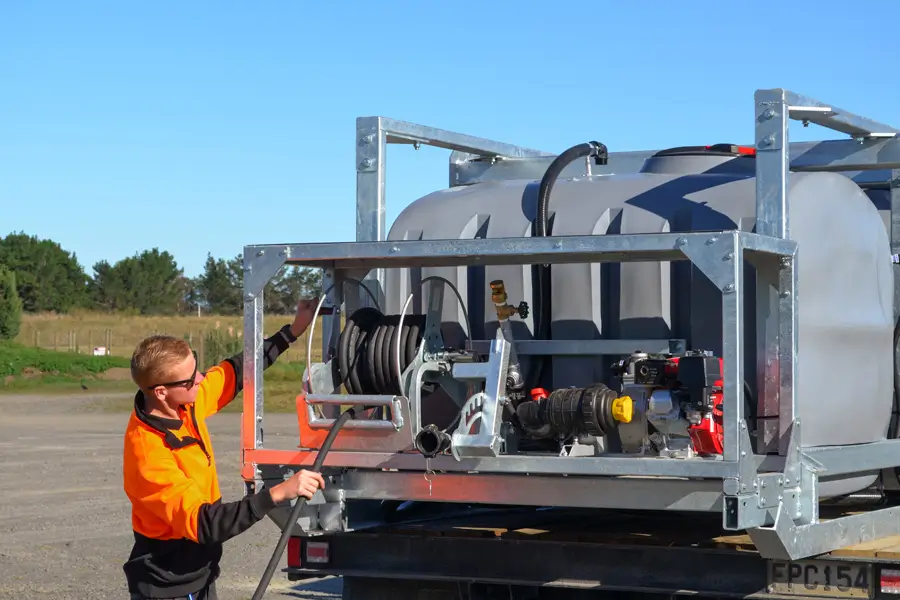
A site trailer that combines lighting with other site services on a single towable unit. The SiteMaster 2000 is the NZ example: a 2000L water tank, a 5kVA petrol generator and a 5.5m LED lighting tower on one trailer.
It came out of conversations with contractors who were running a water cart, a generator and a lighting tower on the same job and wanted the lot on one chassis. The trade-off is that no single function is specified as heavily as a dedicated machine would be. The gain is that one tow move repositions all three.
Setup Time and Crew Effort
On a standalone tower, setup is unhook, level, deploy the stabilisers, raise the mast and start the engine. Depending on the unit, the mast is raised hydraulically or by winch. It is a known routine and most crews are quick at it.
The difference with an integrated trailer shows up when the shift needs more than lighting. If the crew also needs water for stabilising or washdown and power for tools, an integrated unit is one setup sequence instead of three, in one position, with one fuel check. On a short night maintenance shift where the crew is on site for four hours, the setup and pack-down time saved across three separate units is not a small number.
Mast type is worth understanding as well. The SiteMaster 2000 uses a manual winch driven mast rather than a hydraulic one. Fewer moving parts and less to go wrong or leak, at the cost of a bit of physical effort at setup.
Transport and Towing: the Two Trailer Problem
This is the practical constraint most contractors underestimate.
New Zealand light vehicle rules do not allow a standard ute to tow two trailers at once. If your crew needs water and lighting on the same night shift, and those are two separate trailers, that is two trips, or a second tow vehicle, or a delivery booking from a hire company. Multiply that across a roading maintenance programme that moves position every night and the logistics cost becomes real.
An integrated trailer is one tow. The crew hooks up the unit they were taking anyway and the lighting comes with it. Repositioning mid-shift is the same story: one move instead of two or three.
For crews who only ever need lighting, none of this applies. One trailer is one trailer either way.
Light Output and Coverage
The SiteMaster 2000 runs four LED lights producing 68,000 lumens in total, on a mast that extends to 5.5m with 360 degree rotation and independently directable heads. That covers a typical road works zone, a stabilising or paving section, or a small to medium emergency response site.
Larger standalone towers can go higher and brighter. If you are lighting a large open earthworks area or a long section of carriageway, a taller mast with a higher total output will cover more ground from one position, and on very large sites you may need more than one tower regardless of which type you choose.
Two points are worth making on the lighting technology itself. LED heads reach full output immediately, which matters when you need to shift a tower mid-shift and cannot wait for a metal halide lamp to cool and restrike. They also cool quickly enough that the tower can be dropped and moved without risking the lamps, which is a genuine time saver on jobs that progress along a corridor.
The more useful question is not maximum output but whether the light can be aimed where the crew is actually working. Independently directable heads with full rotation put light on the work face rather than wasting it on the empty half of the site.
Power for Tools, Not Just Lights
Most standalone lighting towers include auxiliary power outlets, but capacity varies significantly between models and the outlets are sized around the lighting load.
On the SiteMaster 2000 the 5kVA generator runs the lighting tower through one 240V outlet and leaves a second 240V outlet for site tools. That covers most concrete breakers, small welders, grinders, pumps and chargers a night crew runs, plus the kettle that keeps morale up at 2am. For very high draw equipment, check the tool’s startup amperage against the 5kVA rating before you rely on it.
If your night shift routinely involves running tools on a site with no mains power, this is the point where the integrated option starts to look less like a compromise and more like the obvious answer.
Fuel, Servicing and What Goes Wrong
A standalone lighting tower is usually diesel, sized for long unattended run times. That is a genuine advantage on sites where the tower stays put for weeks.
An integrated trailer has more systems on it and therefore more to check. On the SiteMaster 2000 the generator and lighting run on one petrol engine, and the water pump runs independently on its own Honda GX200. Two engines to fuel and check rather than one, but both petrol, both familiar, and both serviceable with off-the-shelf parts sourced in New Zealand.
Set against that, the alternative is not one engine. It is a diesel engine on the lighting tower plus a separate engine on the water pump on a separate trailer, with two sets of checks in two locations and two hire agreements if either is hired.
Buying Separate Equipment vs Buying One Integrated Trailer
If you are planning to purchase rather than hire, the comparison changes again. Buying a standalone lighting tower and a dedicated water trailer means two separate assets to purchase, maintain, register and transport. Each has its own servicing schedule, storage requirements and operating costs.
By comparison, the SiteMaster 2000 combines lighting, power and water into a single trailer. Instead of managing three separate machines, crews tow, service and deploy one integrated unit. For contractors who regularly need all three functions on the same project, this reduces fleet complexity, simplifies logistics and shortens setup time.
The trade-off is flexibility. Separate machines can be deployed independently when only one function is required, while an integrated trailer delivers the greatest value for crews that routinely need lighting, water and power together.
Where a Standalone Lighting Tower Still Wins
An integrated trailer is not the right answer for every job. A dedicated standalone tower is the better choice when:
You need lighting only, with no water requirement on the same site, as standalone lighting towers include their own onboard generator and auxiliary power outlets.
The site is large enough that mast height and total output are the deciding factors
The tower will sit in one position for weeks and long unattended diesel run time matters more than mobility
The job is a one-off or short-term project where capital ownership cannot be justified
You need several towers positioned across a large area at the same time
If any of those describe your typical work, hiring or buying a standalone lighting tower is likely to be the better investment than a multi-function trailer. There is no benefit in owning a multi-function trailer to solve a single-function problem.
Quick Comparison
Factor
Integrated site trailer
Standalone lighting tower
Functions
Lighting, power and water on one unit
Lighting, with auxiliary power on some models
Tow trips required
One
One per unit, and NZ rules do not permit towing two trailers
Setup sequences
One
One per unit on site
Mast height
5.5m
Varies, larger units go higher
Repositioning during a shift
One move covers all services
One move per unit
Fuel type
Petrol, familiar and quick to refuel
Usually diesel, longer unattended run time
Best for large open sites
Suitable
Best fit
Best for mobile night works crews
Best fit
Suitable
Cost model
Capital purchase, one integrated asset
Weekly hire or capital purchase as a standalone asset
The SiteMaster 2000 at a Glance
Water tank capacity: 2000L, with a 120 L/min flood jet nozzle and a 25m low pressure hose
Lighting tower: 5.5m extension, four LED lights at 68,000 lumens total, 360 degree rotation, winch driven
Power generation: 5kVA with two 240V outlets
Trailer rated capacity: 2500 kg, dual 1-7/8 inch and 50mm hitch coupling
Towable by any ute or light commercial vehicle with a 2500 kg towing capacity
In practice, NZ crews use the water and the lighting at the same time rather than switching between day mode and night mode. Stabilising road millings with cement and water on an overnight resurfacing shift is the clearest example, and it is one of the reasons the unit ended up configured the way it is.
If you only need water, the AquaMaster 2000 is the simpler and cheaper buy. Our water cart setup guide covers positioning and refill planning for that side of the work.
Which One Suits Your Crew
Start with what actually goes on site. If lighting is the only requirement and the site is large or static, a standalone tower is the right tool and hiring one is usually the right call.
If your crew is turning up to a night shift with a water trailer, a generator and a lighting tower, and spending the first half hour of every shift setting all three up, an integrated site trailer is worth pricing properly.
Talk to our team about your typical night works mix and we will tell you honestly which way we would go if it were our crew.