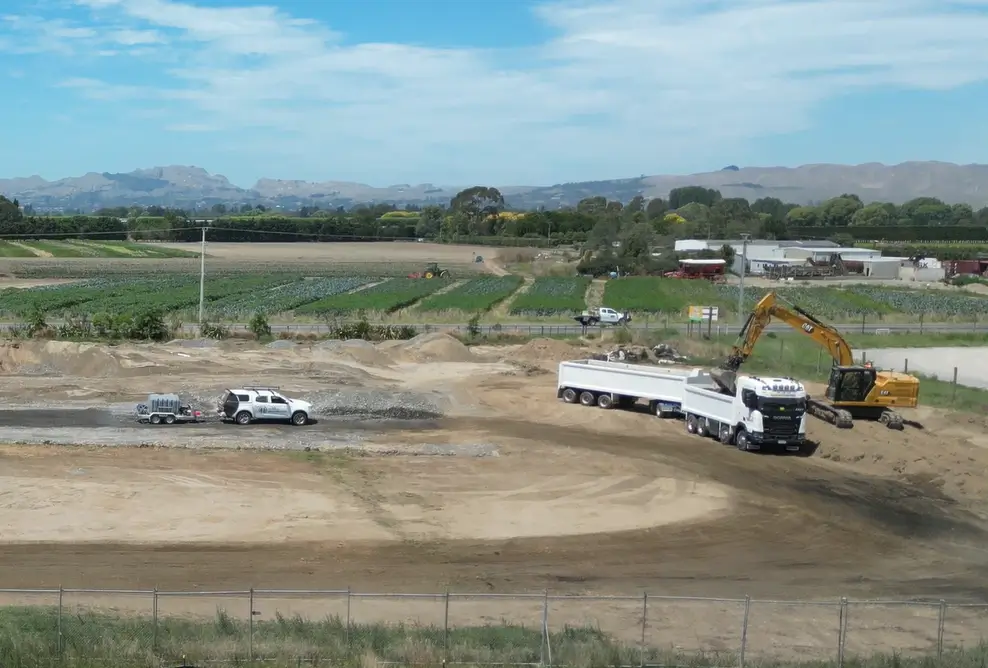
Every year across New Zealand, utility contractors strike buried services they did not know were there. A fibre cable nicked by a digger bucket. A gas line clipped during a trench. A water main ruptured on a tight residential site. The damage goes far beyond the repair bill. There are consent breaches, WorkSafe notifications, network outages and reinstatement costs that can dwarf the original job value.
Non-destructive digging exists specifically to stop this from happening. It is not a premium option reserved for complex urban projects. In many cases, it is the standard that councils, Chorus, Transpower and water utilities now require before any mechanical excavation begins near their assets.
This article explains what non-destructive digging is, why it matters on NZ utility sites, and what options are available to civil contractors and council crews who need to bring that capability into their own operation.
What Non-Destructive Digging Actually Means
Non-destructive digging, also called vacuum excavation or safe digging, uses a combination of high-pressure water and a powerful vacuum to break up soil and extract it into a sealed spoil tank. No mechanical bucket touches the ground. No blade, no teeth, no hydraulic force working blindly through the soil profile.
The process is precise enough to expose buried services without disturbing them. The operator can work to within centimetres of a gas line or fibre conduit, remove the soil around it to confirm location and depth, and leave the service completely intact. That is not something a mechanical excavator can reliably achieve, regardless of the skill of the operator.
In New Zealand the method is most commonly referred to as hydro excavation, hydrovac digging or potholing. The terminology varies by region and industry, but the principle is the same: expose the ground safely before committing to any mechanical work nearby.
Where It Matters Most in NZ Utility Work
The environments where non-destructive digging delivers the clearest benefit are those where the ground holds surprises. Urban streetscapes that have been dug and re-dug over decades. Subdivision sites where the as-built records do not match reality. Rural roading corridors where fibre and power lines share the same trench corridor as water and wastewater pipes.
In New Zealand these situations come up constantly. Councils run Dial Before You Dig enquiries, but the information returned is indicative rather than precise. The only way to know exactly where a service is, and how deep it runs, is to expose it. Non-destructive digging is the tool for that job.
Common applications on NZ utility sites include potholing to confirm service locations before excavation, exposing buried joints for connection or inspection work, working around fibre and power infrastructure in urban road corridors, draining or cleaning stormwater sumps and culverts, and post-weather event recovery where saturated ground makes mechanical digging difficult.
The Safety Case Is Also the Commercial Case
The cost argument for non-destructive digging is straightforward. A hydrovac unit on site for a day costs money. Striking an underground service costs more. Striking the Chorus fibre network or a high-pressure gas line costs significantly more again, and in some cases the reinstatement and liability exposure runs into the hundreds of thousands of dollars.
Beyond the direct cost, service strikes trigger incident reporting, can halt a project while investigations are completed, and create the kind of reputational damage that affects future tender opportunities. For a civil contractor or utility company managing relationships with network operators and local authorities, a clean record on service strikes is a commercial asset.
Non-destructive digging is increasingly written into contract specifications precisely because the clients who commission civil and utility work understand this calculation. They would rather pay for the right method upfront than manage the consequences of getting it wrong.
How Hydrovac Equipment Works on Site
A hydrovac excavator uses a high-pressure water wand to cut through soil and a vacuum system to extract the loosened material into a sealed spoil tank on the machine. The spoil is transported off site for disposal at an approved location, which means the excavation area stays clean and accessible during the work.
The operator controls the wand manually, directing the water and vacuum into the area being exposed. Modern machines include boom systems that take the weight of the filled suction hose, reducing operator fatigue across long shifts and improving accuracy when working close to live services.
There are two main vacuum system types used in NZ: air-based systems (also known as blower systems) and liquid ring vacuum systems (also known as wet vac systems). Air-based units lose suction performance when the standpipe enters water, which is a meaningful limitation on NZ sites where wet ground, clay-heavy soils and post-rain conditions are common. Liquid ring vacuum systems maintain full suction in wet conditions and are the system used in the HydroMaster 1000 and the HydroMaster 2000. Both can be operated safely by a single person on site, which reduces crew requirements and keeps the method practical for smaller teams.
Trailer vs Truck-Mounted: Choosing the Right Unit for Your Work
Not every non-destructive digging job requires a full-size truck-mounted hydrovac. For smaller civil contractors, utility crews and council maintenance teams doing regular potholing, sump cleaning or drainage work, a compact trailer-mounted unit is often the more practical and cost-effective option.
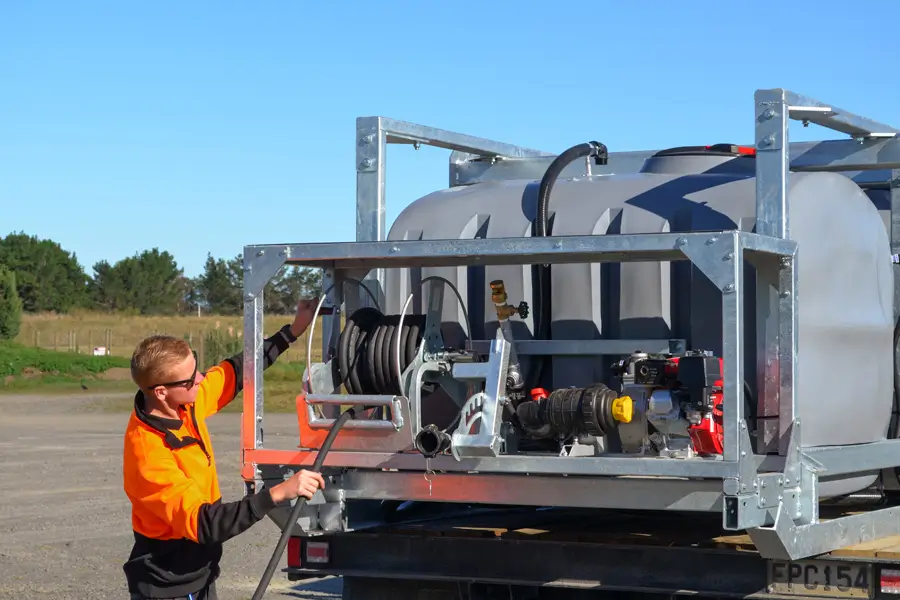
The HydroMaster 1000 is a trailer-mounted hydrovac with a 1 m3 spoil tank, a 250L water blaster tank and a liquid ring vacuum system. It tows behind any ute or light commercial vehicle with a 3,500 kg towing capacity, and can be on site quickly without the cost or logistics of committing a large hydro vacuum excavator truck. Because it uses a liquid ring vacuum rather than an air-based system, it maintains full suction in wet and clay-heavy ground, which is the condition that most frequently causes air-based trailer hydrovacs to lose performance. It is designed to be operated by a single person and is suited to small to mid-size jobs typical of council maintenance work, utility locating and residential site excavation.
For higher-volume operations or jobs where larger spoil capacity is needed, the HydroMaster 2000 is a skid-mounted unit that sits on a flat deck or tipper truck. With a 2 m3 spoil tank and a 1,000L water tank, it suits contractors running multiple crew rotations or working in conditions where frequent tank emptying would create downtime. The 270-degree remote-controlled boom gives the operator more flexibility when working around live services, and the skid frame means the machine moves between trucks without requiring a dedicated vehicle.
A detailed comparison of the two machines is available in the HydroMaster 1000 product page FAQ section, which covers spoil tank size, water tank capacity, towing requirements and the types of jobs each machine is best suited to. If you are new to hydrovac and want to understand how it compares to conventional mechanical excavation, the Hydro Vacuum Excavator vs Digger article on our Insights page covers that comparison in detail.
Getting Started with Non-Destructive Digging in Your Operation
If your team is currently using mechanical excavation for all below-ground work, the practical first step is identifying the job types where non-destructive digging would reduce your risk exposure and make the work more straightforward. Potholing ahead of trenching, sump and stormwater maintenance, and any work in road corridors with confirmed underground services are the most obvious starting points to keep your projects on schedule and compliant.
From there, the question is whether to hire hydrovac capability job by job or invest in your own unit. For crews doing this work regularly, ownership typically delivers a faster return than ongoing hire costs. For occasional work, hire options are available through a number of NZ plant hire companies.
Talk to our team about the HydroMaster 1000 or HydroMaster 2000 and the typical jobs your crew handles. We will tell you straight whether either machine is the right fit, and what the real-world running costs look like for your work mix.