Choosing a water cart is not just about picking a number of litres. The right unit depends on what you are actually doing on site, how big the job is, and what outcomes you need to deliver. Contractors who shop purely by capacity often end up with a machine that is either too small to keep up, too large to move efficiently around a tight site, or potentially end up with the wrong specifications entirely, leading to costly mismatches between equipment capabilities and actual site requirements.
This guide breaks down how to choose the right water cart for your construction site in New Zealand, structured around the jobs and outcomes that matter most on the ground.
Why the Job Matters More Than the Litres
Water carts get used for very different tasks across NZ construction and civil projects. A contractor doing dust suppression on a long straight road section needs something different from a contractor working in a confined subdivision, and both have different needs from someone doing hot works compliance or compaction.
Before you look at capacity, ask yourself what the primary job is. Once you know the job, the right water cart becomes much clearer.
1. Dust Suppression on Civil and Road Construction Sites
Dust suppression is one of the most common uses for water carts on NZ construction sites, and it is also one of the most compliance-driven. WorkSafe requirements and council consent conditions often require active dust management, particularly on dry or windy days.
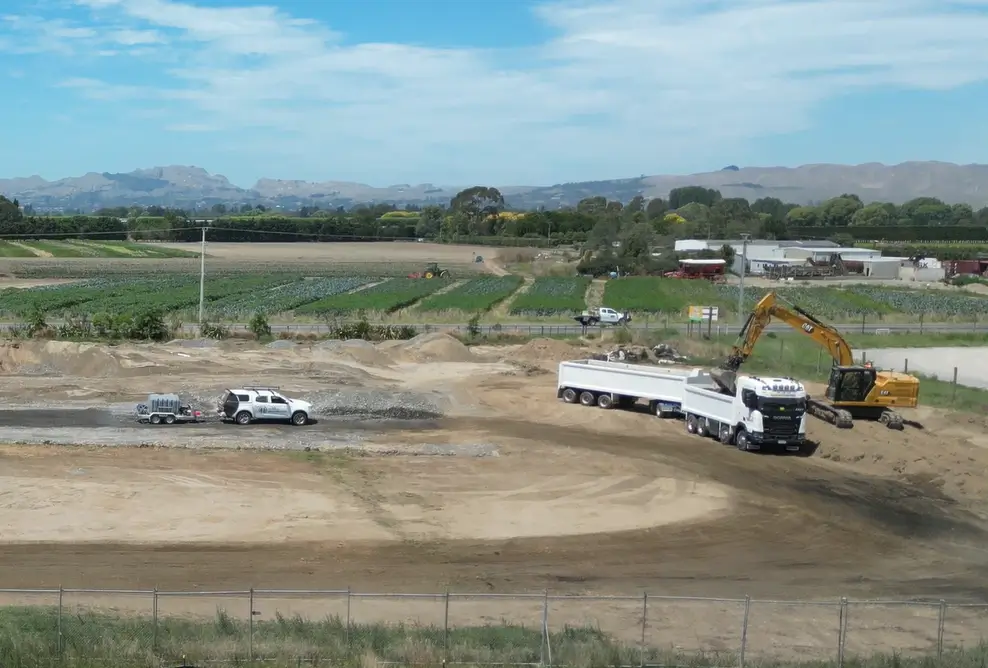
For dust suppression on larger open sites, road corridors, and earthworks areas, you need a consistent flow and enough capacity to cover the site without constantly returning to refill. A 4000L or 6000L unit gives you the run time to suppress dust across a meaningful stretch of ground without interrupting the work.
For large open sites and high-volume suppression: AquaMaster 6000
2. Civil Works and General Site Water Supply
Civil sites often need a reliable water supply for multiple concurrent tasks: compaction, concrete work, pipe testing, equipment washdown, and dust management, all running at the same time. Versatility becomes as important as raw capacity.
A mid-range unit that can be easily repositioned and used for multiple jobs in a single day will outperform a large static tank for most civil applications. The ability to tow with a ute or small truck matters when you need to get in and out of different areas quickly.
Trenching work requires water for compaction of backfill, dust control during excavation, and equipment cleaning. Sites working near underground services also benefit from water availability for locating and exposing utilities safely.
For trenching applications, the key is having enough water on hand without the cart becoming a site obstacle. A compact, towable unit that can be positioned close to the trench and moved as the job progresses works far better than a large static skid tank.
Hot works on NZ construction sites, including grinding, welding, cutting, and any activity that creates sparks or heat near combustible materials, require a water source to be immediately accessible. This is a specific health and safety requirement, not just a best practice.
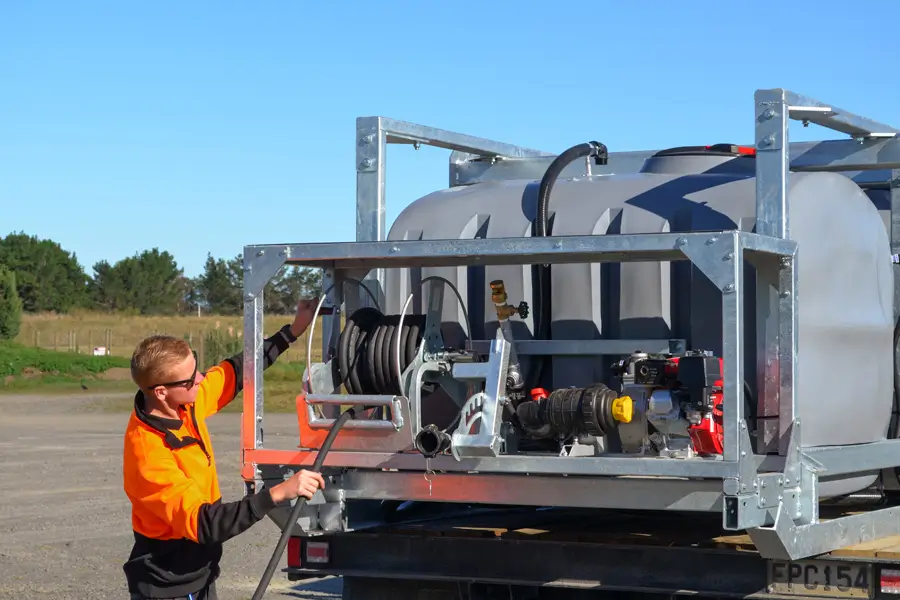
A dedicated water cart positioned at the hot works zone ensures compliance without relying on site infrastructure that may not be close enough. The AquaMaster 2000 is well suited here: it is fast to set up, easy to position close to the work area, and includes high-pressure capability for rapid heat absorption and penetration, ensuring immediate fire suppression if needed
Landscaping and compaction work on subdivisions and civil sites requires consistent moisture for soil stability and plant establishment. The volumes needed are moderate, but the frequency of use throughout the day can be high.
An easy-to-use unit that can be refilled quickly and moved between landscaping areas without heavy equipment keeps the pace of work up. For freshly seeded areas, subdivisions, and bulk earthworks compaction, a 2000L to 4000L unit is typically the most practical choice.
Not every NZ construction site is a flat, open road corridor. Rural roading, remote infrastructure work, and hill country projects present access challenges that affect which water cart is practical.
For remote sites, a towable trailer unit is typically far more practical than a large skid-mounted tank. You can get it behind a ute, pull it up an access track, and position it where the work is happening. The AquaMaster 2000 excels in these conditions, and its tow-behind design means it goes where the job goes.
For larger remote sites where run time is critical and you cannot refill frequently, the AquaMaster 4000 and 6000 offers the combination of capacity and mobility that keeps work moving.
Every site is different, and a quick conversation with the Master Machinery team can save you time and money. We work with contractors across New Zealand and understand the specific demands of NZ civil, road, and infrastructure projects.
Explore the full AquaMaster range and get in touch to discuss your requirements: