Ask most contractors why they hesitate over non-destructive digging and the answer is usually the same: it looks more expensive. On an hourly-rate basis, a hydro excavation crew can read as dearer than putting a digger in the ground and getting on with it. That comparison is where a lot of money quietly leaks out of NZ civil projects.
The honest way to look at cost is not what a method charges per hour. It is what the job costs by the time it is signed off, including everything that can go wrong along the way. Once you count service strikes, consent breaches, reinstatement, rework and standby time, non-destructive digging is very often the cheaper way to break ground near underground services. Here is where those savings actually come from.
The hourly-rate trap
A mechanical digger moves a lot of soil quickly, and for open, service-free ground it is hard to beat on cost. The trouble is that the true price of an excavation method is not fixed. It swings depending on what is buried, how accurate the plans are, and what happens if a bucket finds something it should not.
Non-destructive digging changes the shape of that risk. High-pressure water breaks up the ground and a vacuum lifts the spoil into a sealed tank, so buried assets are exposed rather than struck. You trade a slightly higher hourly figure for a much narrower range of possible outcomes. On a civil project, predictable is cheap and surprises are expensive. For a fuller explanation of how the method works, see our guide on what hydro excavation is and why NZ contractors are switching.
The real cost of a service strike
A single utility strike is the fastest way to turn a profitable job into a loss. The direct repair bill is only the start. Strike a fibre optic cable and you are not just paying to splice it, you are potentially liable for the downtime of everyone who relied on that connection. Strike a power cable or gas main and you add serious-harm risk, WorkSafe involvement, and a site shutdown while the incident is investigated.
These costs stack up in a way that dwarfs any hourly saving:
Repair and make-good of the damaged asset, often at the asset owner’s rates and on their timeline.
Consequential loss claims from the utility or third parties affected by the outage.
Site downtime while the area is isolated, investigated and cleared to restart.
Reputational cost, which shows up later as work you do not win.
Because hydro excavation, operated at safe pressures, dramatically reduces the risk of severing a cable or rupturing a main, non-destructive digging removes the most expensive single failure on a utility job. We cover the safety mechanics in detail in our comparison of hydro excavation vs trenching for utility work.
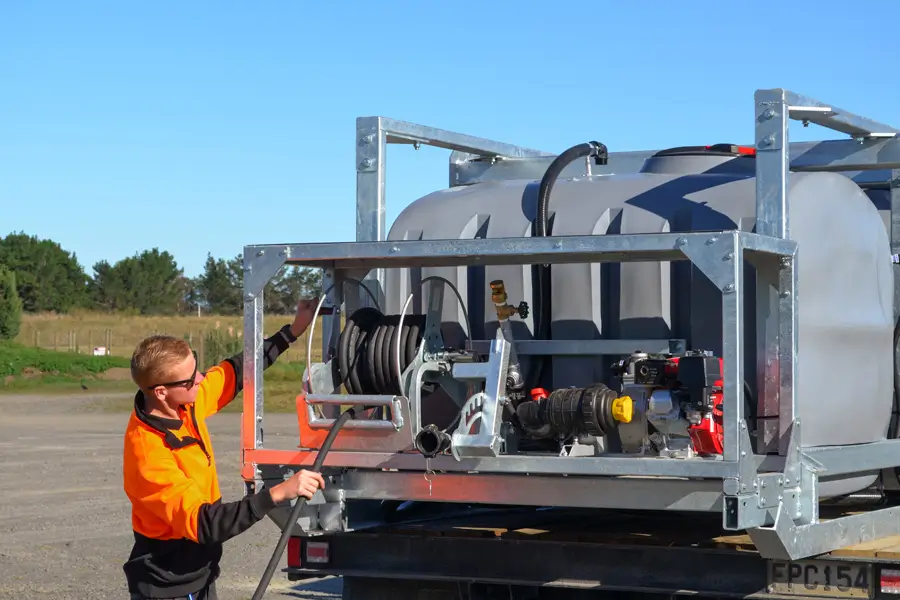
Non-destructive digging in action, using the hydromaster 1000.
Consent breaches and stop-work orders
On many NZ sites, especially in urban areas and near council or utility assets, the method you use is not entirely your choice. Resource consent conditions, corridor access agreements and utility requirements increasingly specify non-destructive methods for exposing services. Using a mechanical digger where non-destructive digging was required is a breach, and breaches carry their own price: abatement notices, stop-work orders, and the cost of demonstrating compliance before you can resume.
A stop-work order does not just cost the hours it halts. It idles your crew and plant, pushes out every task that was scheduled behind it, and can trigger liquidated damages if the delay flows through to a completion date. Doing the exposure phase with a hydrovac keeps you on the right side of the consent and keeps the programme moving.
Reinstatement: you only dig what you need
Mechanical excavation displaces far more material than most utility tasks actually require. Every extra cubic metre you remove is a cubic metre you have to backfill, compact and reinstate, and on urban sites that reinstatement is rarely cheap. Road surfaces, footpaths, kerbing and landscaping all have to be returned to standard, and that work is often the most visible and most scrutinised part of the job.
Non-destructive digging removes only the spoil the task needs. A neat pothole to confirm a service, or a clean slot along a cable run, means a fraction of the reinstatement of a wide mechanical trench. Less spoil out is less material to cart, less backfill in, and less surface to make good. On a job with any density of hard surfaces, that alone can offset the higher dig rate.
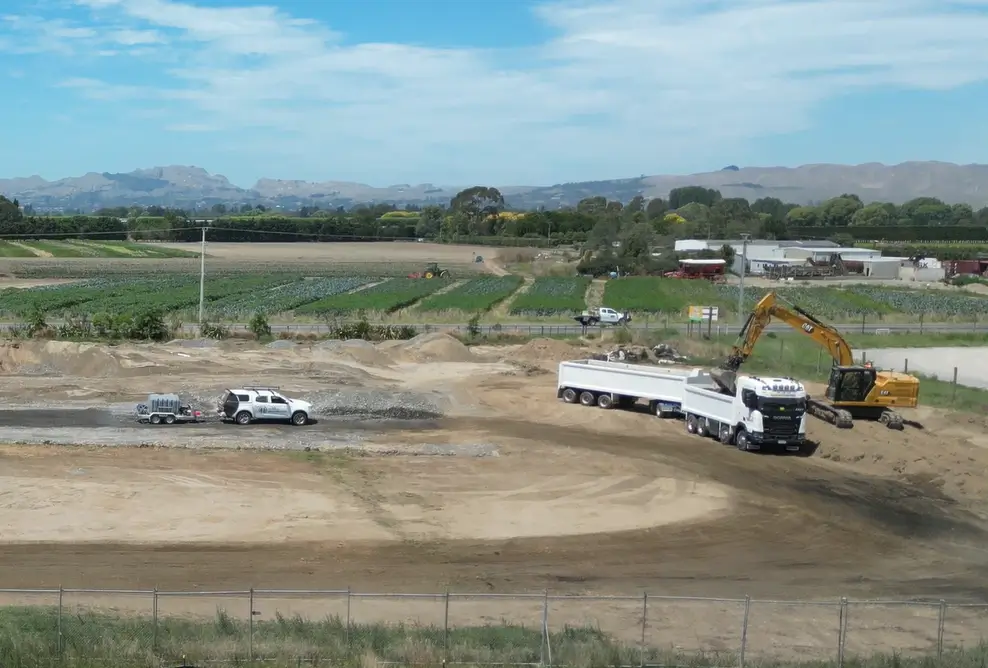
The Hydromaster 2000 being used on a civil site to expose services with minimal ground disturbance, helping reduce excavation, reinstatement and project delays.
Rework, delays and standby costs
Uncertainty is expensive even when nothing gets struck. When crews cannot confirm exactly where a service sits, they slow down, hand-dig, or bring the whole operation to a crawl to protect the asset. Verified information changes that. Potholing with a hydrovac gives you ground-truth on depth and location before the main works start, so the following trades can work at full pace instead of tiptoeing.
It also cuts the standby that quietly drains a budget: the digger waiting while someone hand-checks a location, the crew standing down after a near miss, the delay while a strike is assessed. Removing those pauses is a real saving that never appears as a line item, because the problem simply never happens.
Insurance, liability and winning the next job
There is a commercial dimension beyond the site itself. A contractor who can show that non-destructive methods were used for service exposure carries a stronger, more defensible safety record. That matters for insurance exposure, for prequalification, and for the tenders where a client or council weighs your method statement as heavily as your price.
Increasingly, the work goes to the contractors who can demonstrate safe digging near services as standard practice. Non-destructive digging is not only cheaper on the jobs you have, it helps you win the jobs you want. For more on why utilities and councils are moving this way, see why non-destructive digging matters for utilities.
Where the savings show up on the invoice
Put together, the case for non-destructive digging is not sentimental. It is arithmetic. The higher hourly rate is real, but it is small next to the costs it removes.
Cost driver
How non-destructive digging saves you money
Service strikes
Water and vacuum expose assets without severing cables or rupturing mains, removing the single most expensive failure on a utility job.
Consent breaches
Meets non-destructive requirements in consents and corridor agreements, avoiding abatement notices and stop-work orders.
Reinstatement
Removes only the spoil the task needs, so there is far less backfill, compaction and surface make-good.
Rework and standby
Verified service locations let following trades work at full pace, cutting hand-digging and stand-down time.
Liability and insurance
A defensible non-destructive record lowers risk exposure and strengthens prequalification and tenders.
The HydroMaster range: matched to the job and the access
Master Machinery builds two non-destructive digging units for NZ civil and utility work, so you can match the machine to the site rather than the other way round.
The HydroMaster 1000 is the compact, trailer-based option. It is towable, sized for tight access, residential driveways and confined urban jobs, and set up for single-operator potholing and service exposure where a full-size truck would be more machine than the site can take.
The HydroMaster 2000 is the truck-mounted option for higher-volume work. Mounted on a skid frame with a 2 cubic metre spoils tank, it fits a class 2 four-wheeler truck and carries a full vacuum system that keeps working in wet and saturated ground. A 1000L onboard water tank with camlock fittings, 270 degree remote-controlled boom and a 5 inch suction hose make it efficient on larger utility, drainage and infrastructure jobs. You can read more in the HydroMaster 2000 advantage.
Not sure whether a hydrovac or a mechanical digger suits your next job? Our guide on hydro vacuum excavator vs digger walks through the trade-offs so you can plan the dig around what is actually in the ground.
The bottom line
Non-destructive digging is not the cheapest way to move a bucket of dirt. It is the cheapest way to finish a civil job near underground services with no strike, no breach, minimal reinstatement and no nasty surprises. On the sites where those risks live, the hourly rate is the smallest number that matters.