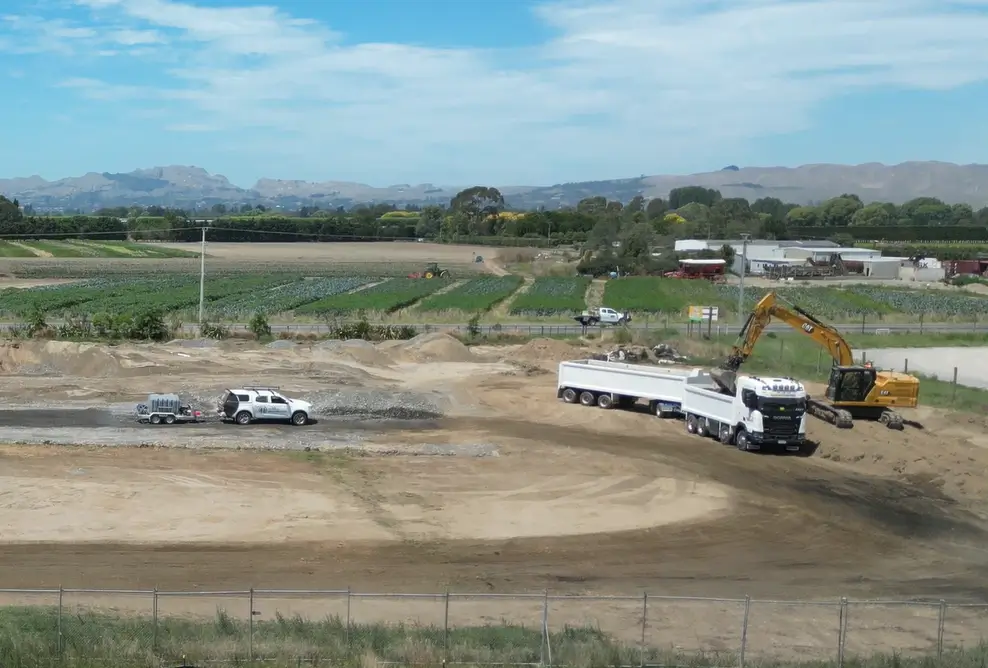
Dust is a real headache on construction and roading sites across New Zealand. It slows work, creates complaints, and lands your team in trouble when compliance slips. Is dust slowing down your roading crew? Are your utility projects hitting compliance issues because of dust? We get it.
Most crews mix up dust suppression and dust control. They sound the same, but they are not. One is a quick fix. The other is a long-term plan. Knowing the difference saves time, money, and frustration.
Whether you’re based in Auckland or the Waikato – or anywhere else in New Zealand – this blog clears things up and shows you when the AquaMaster is the right tool to keep your site safe, productive, and compliant.
Dust suppression is simple. It’s the fast, short-term action you take when dust is already blowing. It deals with what you can see right now. Think of it as a temporary fix.
The most common method is watering down a track or work area. It works, but only for a short while. You often need to repeat it all day. It also risks over-wetting, which slows down earthmoving work and can stop machinery in its tracks. That’s where crews lose time and money.
For smaller sites or fast-moving jobs, in places that experience especially dry Summers like Northland and Bay of Plenty, suppression is the usual go-to. But for bigger projects or long-term work, there’s a smarter way.
Dust Control – The Long-Term Solution
Dust control is different. It’s the planned, long-term strategy that prevents dust from becoming a problem in the first place. It’s proactive, not reactive. This is the expert approach used on larger construction, utility, and roading jobs.
Good control combines planning, wind barriers, and consistent moisture management across the whole site. It keeps dust locked down before the crew starts moving soil.
The benefits stack up fast. You get better health and safety results. You reduce downtime caused by dust stoppages. You cut complaints from nearby businesses and homeowners. This matters on jobs such as from Wellington to Auckland, wherever compliance and public feedback are taken seriously.
The AquaMaster – Mastering Dust Suppression and Control
Most crews don’t need to choose between suppression and control. You often need both. A fast fix for blow-outs and a long-term plan for the rest of the job. That’s why the AquaMaster is the machine that ties everything together.
The AquaMaster gives you real dust control with steady, measured water distribution. You decide the water flow, and you avoid over-wetting. This keeps your earthmoving team working without delays. You keep the site productive and avoid mud pits that slow down every machine.
But what about sudden dust blow-outs? That’s where the suppression power kicks in. The adjustable spray system and strong pump give you fast, wide coverage. You act immediately and keep the team safe and the site visible. No mucking around and no wasted effort.
The AquaMaster is hard-working, reliable, and built for the team. It handles big jobs without fuss. It keeps construction and utility crews productive, compliant, and in control.
Dust suppression reacts to dust. Dust control prevents it. When you understand the difference, you manage your site smarter and with far less stress.
The AquaMaster helps you nail both. It gives you the fast response you need and the long-term moisture control your site relies on. From big builds in Auckland to roading work in Waikato, the AquaMaster is the right tool for the job.
Don’t let dust beat you. We’re here to help you be the master of your site.
What is the difference between dust suppression and dust control?
The difference is that dust suppression stops dust once it is already in the air, while dust control prevents the dust from rising in the first place. While people often use the terms for the same thing, they are actually two different stages of managing a site.
Key differences include:
Dust Control (Prevention): This involves treating the ground surface to keep particles bound together.
Dust Suppression (Reaction): This is the process of “knocking down” airborne dust. If a cloud of dust has already formed during crushing or dumping, water droplets are sprayed into the air to catch the dust and pull it back to the ground.
Method of Application: Control usually requires a steady, soaking spray from a rear spray bar. Suppression often uses high-pressure misting nozzles or “fog” systems to create a curtain of water.
Goal: The goal of control is to maintain a safe, visible work environment. The goal of suppression is often to meet environmental regulations and protect the health of the crew and the public.
Using a purpose-built water cart allows you to do both. You can soak a road for control or use the high-pressure nozzles for suppression.
What are the dust suppression features of the AquaMaster 2000?
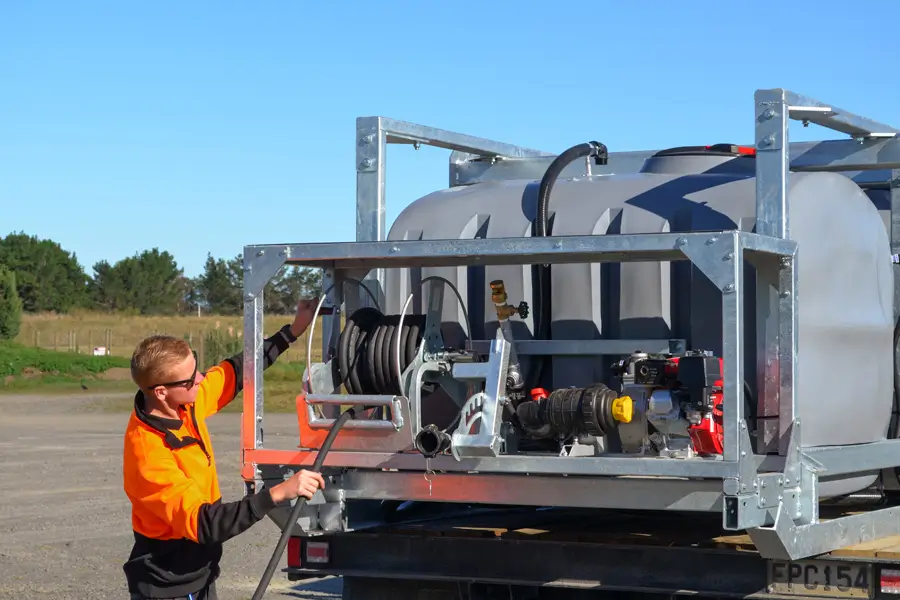
The AquaMaster 2000 is designed with a dual-pump system that allows for both high-volume soaking and fine-mist suppression. This setup ensures you have the right water pressure for everything from heavy road wetting to fine dust control.
Key dust suppression features include:
Adjustable Spray Bar: The rear-mounted spray bar features adjustable nozzles, allowing you to control the width and density of the water coverage.
Dual-Pump Technology: It includes a high-flow pump for bulk water distribution and a high-pressure pump for targeted suppression and washdowns.
Precision Nozzles: The system uses specific nozzles designed to create a mist that binds with airborne dust particles to pull them to the ground.
High-Pressure Hose Reel: Includes a 30m hose for manual suppression in hard-to-reach areas or tight corners where the spray bar can’t reach.
By combining these features, the AquaMaster 2000 keeps your site compliant and your crew safe from respirable dust.