If your next project involves working near underground services, the method you choose to break ground matters more than most decisions you will make on that job. The difference between hydro excavation and traditional mechanical trenching is not just a question of equipment. It is a question of risk, cost, and what happens if something goes wrong.
This article breaks down the key differences between hydro excavation and conventional trenching, explains where the safety risks actually sit, and helps NZ contractors, councils, and utility companies understand which method suits which type of work.
What We Mean by Trenching
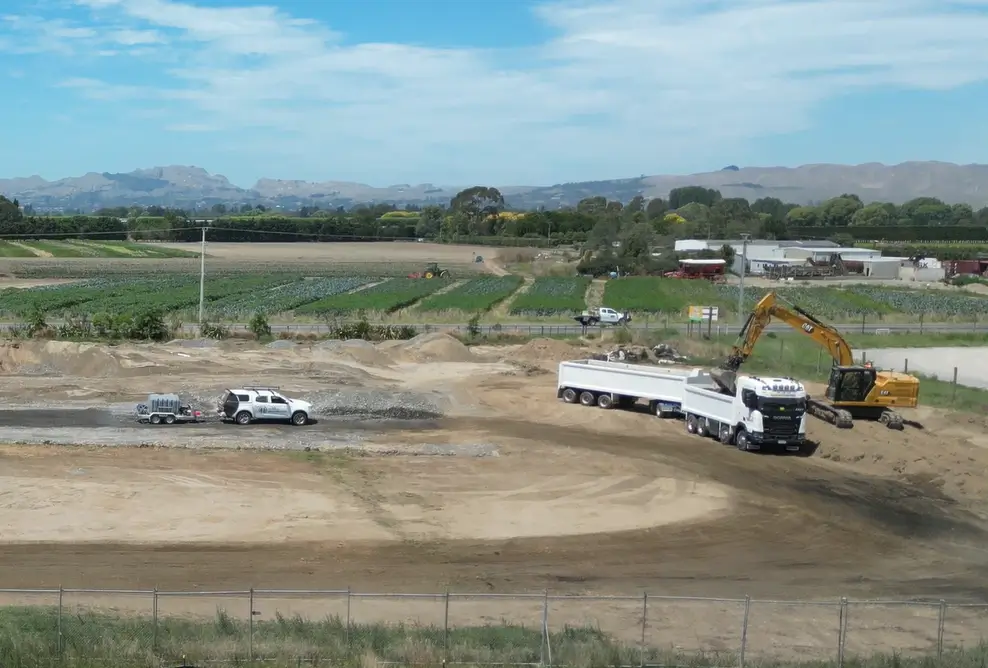
Traditional trenching uses mechanical equipment, typically a digger, excavator, or trenching machine, to physically cut through the ground and remove material. It is fast, cost-effective for bulk soil removal and well understood by most civil crews.
The problem arises when buried infrastructure is in or near the dig path. New Zealand has an extensive and increasingly dense network of underground assets: fibre optic cables, power lines, gas mains, water mains, stormwater systems, and telecommunications conduits. Many of these assets are not mapped with the precision that modern construction demands, and even when they are, real-world accuracy can vary.
Mechanical excavation equipment cannot distinguish between soil and a live cable. If a bucket hits a buried asset, the consequences range from costly service disruption to a serious safety event.
What Hydro Excavation Actually Does Differently
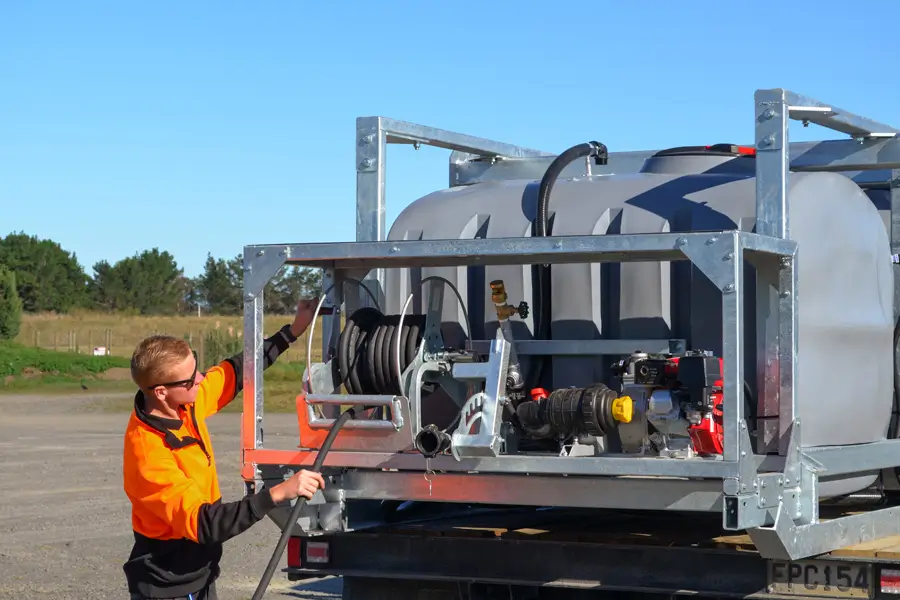
Hydro excavation, sometimes called vacuum excavation or non-destructive digging, replaces the mechanical bucket with a combination of pressurised water and powerful vacuum suction. High-pressure water breaks up the ground, and the vacuum immediately draws the resulting slurry into a sealed spoils tank on the machine.
The key difference is in how much the water jet reduces the risk of a utility strike. Unlike a mechanical bucket, pressurised water loosens material without the force needed to sever a fibre optic cable, rupture a gas main, or crush a conduit. The vacuum then removes the slurry cleanly, leaving buried assets exposed with significantly less risk of damage. That said, technique still matters, hydro excavation reduces the likelihood of a strike, it does not eliminate it.
For utility work, this is the fundamental safety advantage: you can excavate with confidence right up to a buried asset without risking a strike.
The Real Safety Risks with Mechanical Trenching Near Utilities
Striking Live Services
Striking a live power cable or gas main with a mechanical digger is one of the most serious incidents that can occur on a NZ worksite. WorkSafe New Zealand highlights utility strikes as a major hazard, with consequences that can include injury, fatalities, project shutdowns, liability claims, and, in some cases, prosecution.
The risk does not disappear just because services have been located. Location data is sometimes inaccurate, depths vary, and services shift over time. Mechanical equipment in the hands of an experienced operator can still strike an asset that is not where the plans say it should be.
Ground Instability and Trench Collapse
Mechanical trenching removes significant volumes of soil, which can destabilise adjacent ground and create the risk of trench collapse. Trench collapse is a known cause of serious injury and death on construction sites, and it is a particular concern in the soft or variable ground conditions common across many parts of New Zealand.
Collateral Damage and Reinstatement Costs
Mechanical trenching displaces more material than is strictly necessary for most utility access tasks. The wider the excavation, the more reinstatement is required, and on urban sites where road surfaces, footpaths, and landscaping must be fully restored, this adds up quickly. Accidental damage to an adjacent service during trenching also triggers its own investigation, repair costs, and liability exposure.
Where Hydro Excavation Changes the Risk Profile
Safe Potholing and Service Exposure
Potholing, the process of carefully excavating a small area to visually confirm the location and depth of a buried service, is one of the most common applications for hydro excavation in NZ utility work. Before major works begin near underground infrastructure, a pothole provides verified, ground-truth information about what is actually there.
Doing this with a mechanical digger is inherently risky, even when done carefully. Hydro excavation allows the same service exposure with near-zero risk of damage. The process is also faster, and the spoil is contained and removed cleanly.
Confident Working Around Dense Infrastructure
In urban environments where multiple services run in close proximity, mechanical excavation requires very careful management, and even then the margin for error is small. Hydro excavation allows precise, controlled removal of material around a cluster of services without disturbing the assets themselves.
This is why hydro excavation has become a preferred or required method on many NZ council and utility contracts, particularly for works in CBD areas, residential streets, and any location where multiple services converge.
Reduced Liability Exposure
From a commercial and contractual perspective, hydro excavation provides a stronger safety record and a more defensible audit trail. When a contractor can demonstrate that non-destructive methods were used for service exposure and excavation near utilities, the risk profile of the project changes, and so does the liability exposure if something goes wrong through no fault of the excavation method itself.
When Traditional Trenching Still Makes Sense
Hydro excavation is not the right tool for every situation. Traditional mechanical trenching remains the practical choice for:
Bulk earthworks where no underground services are present or have been confirmed absent
Long trench runs in open ground with confirmed service clearance
Applications where speed and volume are the primary requirements and utility risk is low
Rocky or very hard ground conditions where water pressure alone is insufficient for cost-effective excavation
The best practice on most NZ utility projects is to use hydro excavation for the initial service exposure and potholing phase, and mechanical equipment for the broader earthworks once services have been located and marked.
How NZ Contractors Are Using Both Methods Together
The most effective approach on complex utility projects is not either/or. Experienced NZ contractors increasingly use hydro excavation for the high-risk, precision-critical phases of a dig, and mechanical equipment for the lower-risk bulk removal.
This combined approach gives you the speed and cost efficiency of mechanical trenching where it is safe to use it, and the precision and safety assurance of hydro excavation where it matters most. It also aligns with the WorkSafe New Zealand guidance on working near underground assets, which strongly supports non-destructive methods for initial exposure.
For contractors who need a compact, trailer-based option, theHydroMaster 1000 offers hydro vacuum excavation capability in a highly manoeuvrable format, well suited to sites where access is tight or a smaller unit is more practical.
The HydroMaster 2000: Non-Destructive Digging for NZ Utility Work
The HydroMaster 2000 is Master Machinery’s skid-based hydro excavation unit, purpose-built for NZ civil, utility, and infrastructure projects. It is designed to be operated by a standard crew, transported by a truck, and compact enough for the tight access conditions common on urban utility worksites.
Key specifications:
Vacuum tank spoils capacity: 2 cubic metres
Compact dimensions: 4.6 x 2.2 x 2.15 m
Tare weight: 3000 kg, fits a class 2 four-wheeler truck
5″ suction hose for optimal material extraction
1000L onboard water tank with camlock fittings for fast refill
270-degree boom rotation via remote control
Full vacuum system, effective in wet and saturated ground conditions
The HydroMaster 2000 is built for the precision demands of utility exposure, potholing, drainage work, and confined access excavation across New Zealand. Its skid frame design means it can be repositioned quickly between sites and is not dependent on any specific truck.
For utility work near underground services in New Zealand, hydro excavation is the safer method. That is not a marketing claim: it is the assessment behind the growing number of NZ council specifications, utility company requirements, and WorkSafe guidance documents that favour or require non-destructive digging for service exposure.
Traditional trenching remains a practical and cost-effective tool for the right applications. But in the high-risk phases of utility work, the risk of a utility strike, the liability exposure, and the reinstatement costs all point in the same direction: get the services out of the ground safely first, and then bring in the mechanical equipment for the work that follows.